... / 2026 State of... / SWOT Analysis: Weaknesses
2026 State of the Industry Report from Make Startups Institute
3. SWOT Analysis: Weaknesses
The weaknesses identified in the responses point less to a lack of activity and more to a lack of alignment. Many founders encounter an ecosystem that is busy but difficult to navigate, with overlapping programs, inconsistent handoffs, and support that often ends before companies reach meaningful traction. At the same time, the organizations responsible for delivering that support frequently operate with thin staffing, unstable funding, and limited long-term capacity. Respondents also noted that some programs remain shaped more by funder expectations than by the practical needs of founders, which can lead to “startup theater” instead of sustained company building. These challenges are compounded by persistent barriers to access across geography, race, immigration status, and network proximity, highlighting that the field still has work to do to ensure entrepreneurship support is both coherent and broadly accessible.
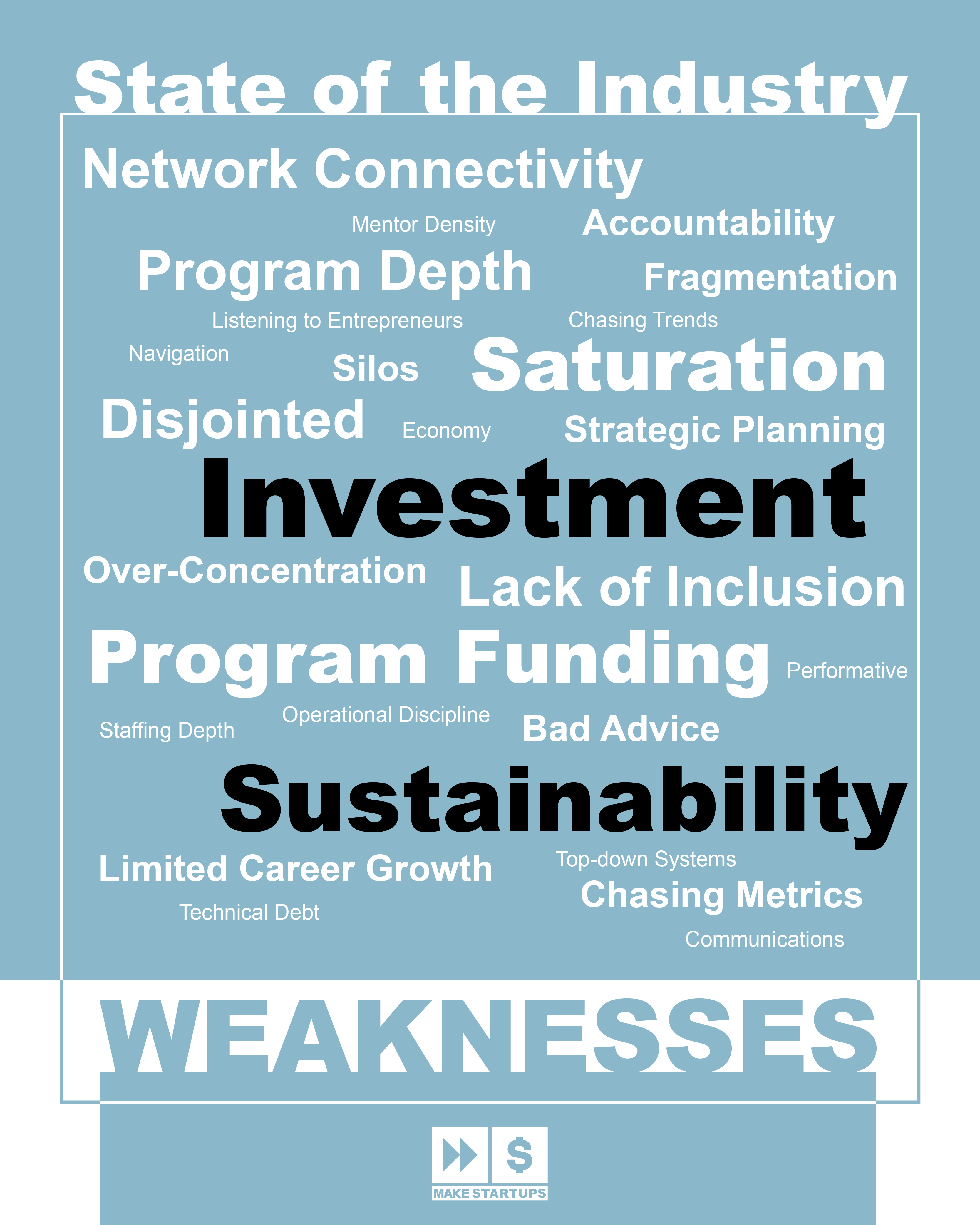
Founders still face a fragmented and confusing support landscape
The most common operational complaint is not the absence of activity, but the absence of coherence. Founders are often asked to navigate overlapping programs, unclear handoffs, and contradictory advice, which creates a hidden tax on entrepreneurship.
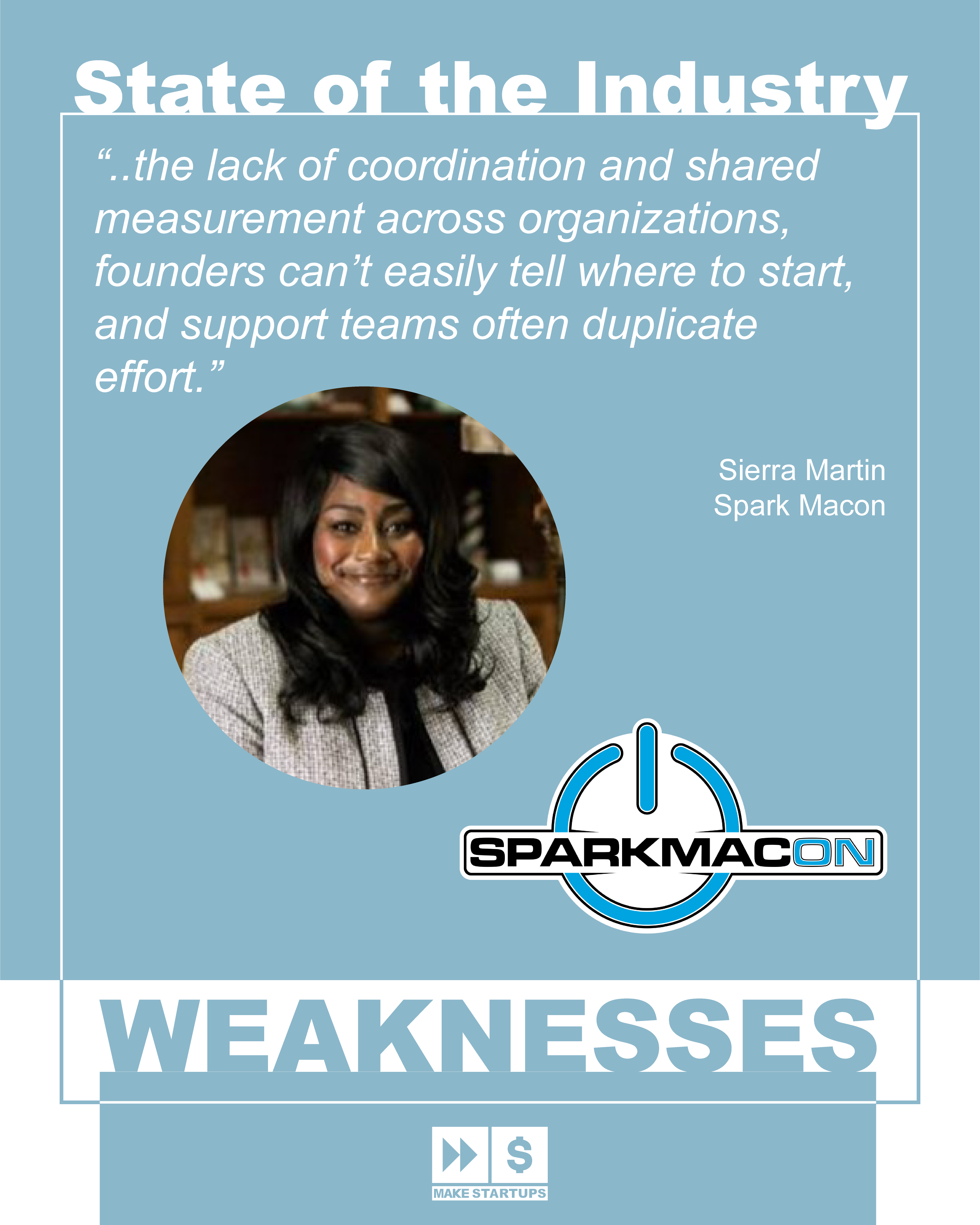
ESO capacity is often thin, unstable, and underfunded
Respondents repeatedly note the fragility of the organizations expected to hold the ecosystem together. Small teams, low salaries, reliance on grants, and dependence on a single campus champion or funder make support systems brittle.
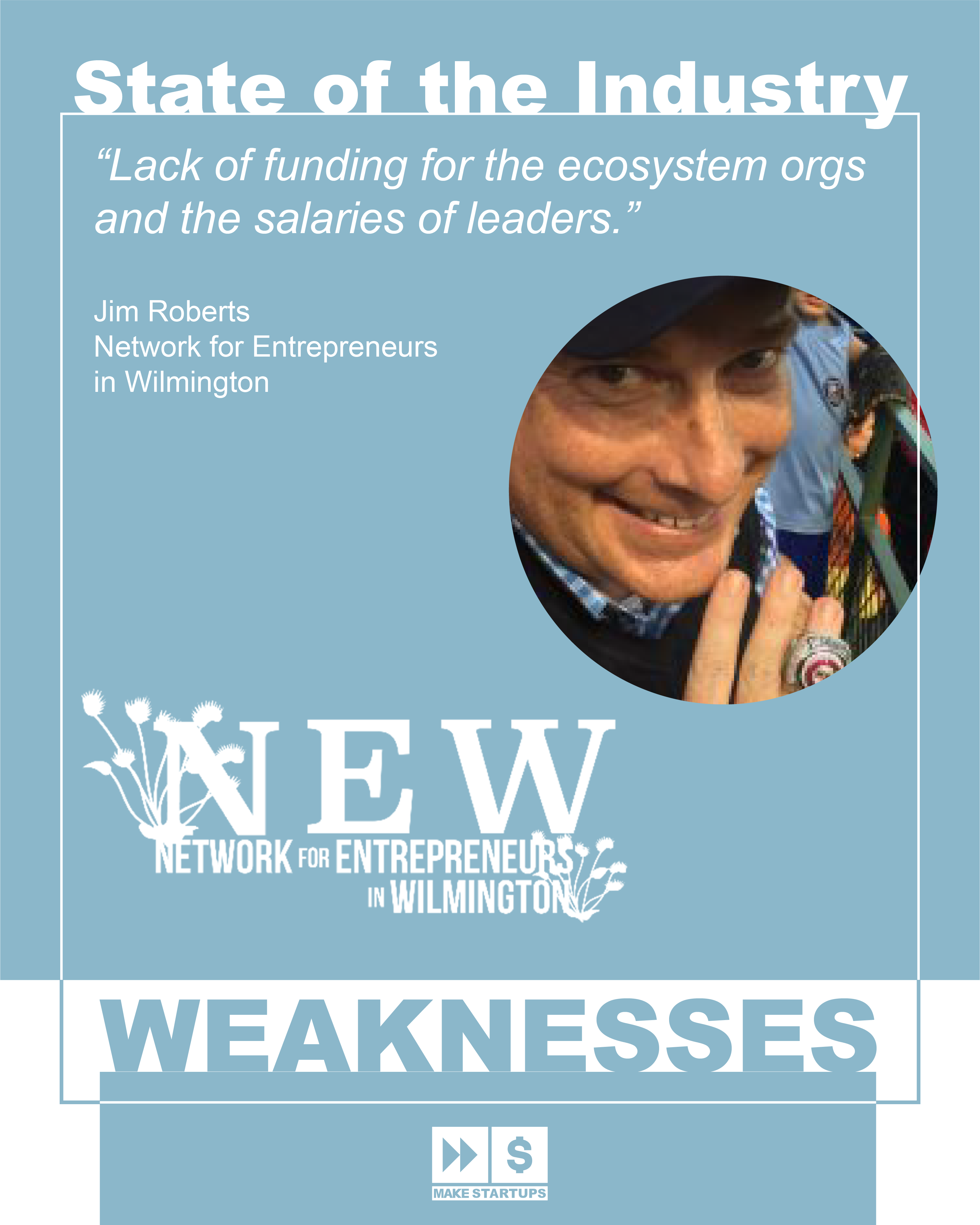
The field overproduces top-of-funnel activity and underinvests in sustained support
Several respondents point to a common pattern: abundant events, competitions, and introductory programming, but fewer resources for deeper commercialization help, investment readiness, customer traction, mentor density, and long-run company building.
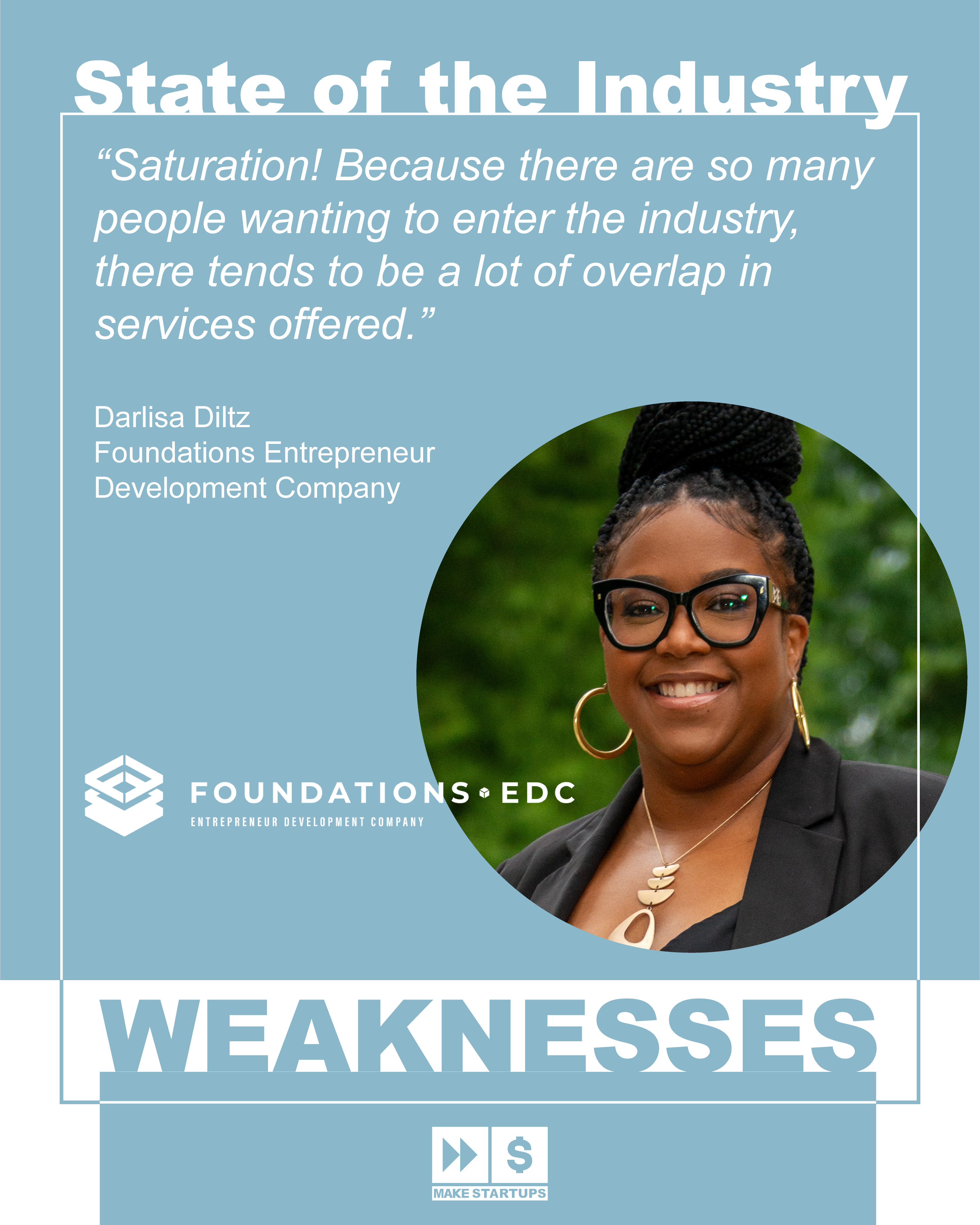
The ecosystem does not always organize around what founders actually need
Respondents mention poor listening, weak customer discovery by ESOs, trend-chasing, startup theater, and narrow definitions of what counts as a 'real' startup. Together, those comments suggest that some support models are still more funder-shaped than founder-shaped.
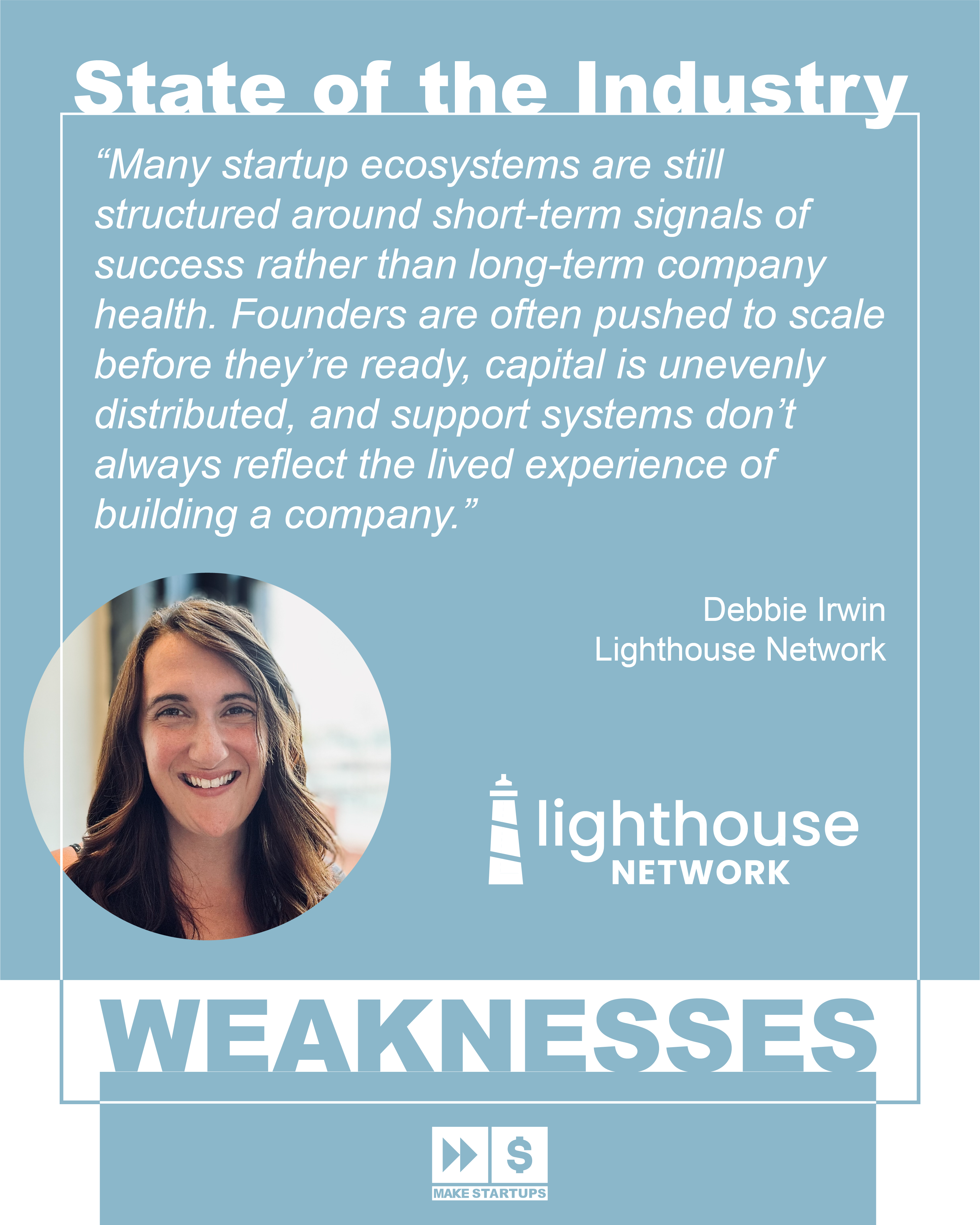
Access remains uneven across race, immigration status, geography, and network proximity
Inclusion appears in the source material not as a side issue, but as a structural weakness. Respondents explicitly name barriers facing founders of color, immigrants, rural entrepreneurs, and builders outside established networks.
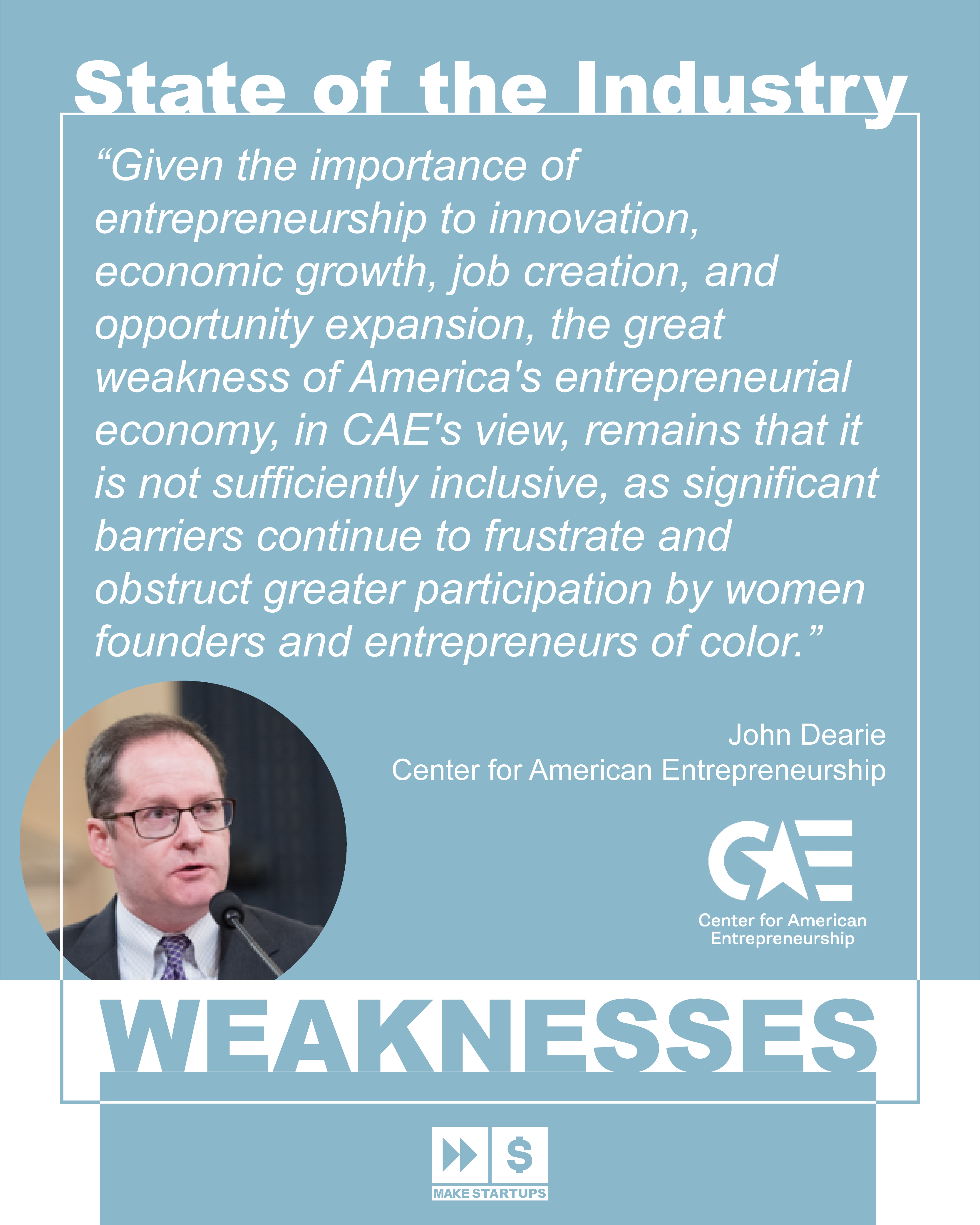
A summary of surveyed weaknesses:
- Founders still face a fragmented and confusing support landscape
- ESO capacity is often thin, unstable, and underfunded
- The field overproduces top-of-funnel activity and underinvests in sustained support
- The ecosystem does not always organize around what founders actually need
- Access remains uneven across race, immigration status, geography, and network proximity
| Category | 2026 State of the Industry Report |
| Curriculum | all |
| Created | 2026/03/11 |
| Last Updated | 2026/03/11 |
| Content Details | |
| IMI Provider | CofounderOS |
| Published | Make Startups Institute |

|
|
- Executive Summary
- SWOT Analysis: Strengths
- SWOT Analysis: Weaknesses
- SWOT Analysis: Opportunities
- SWOT Analysis: Threats
- Strategic priorities for ESOs
- Conclusion and Additional ESO Insights
- Appendix A. Methodology and limitations
- Appendix B. Cross-quadrant evidence map
- Appendix C. Selected respondent excerpts
- Appendix D. Downloads and References
Make Startups Institute is using CofounderOS to help founders design, launch, and scale their businesses.
Financial aid and scholarship packages are available for most programs.