... / 2026 State of... / SWOT Analysis: Threats
2026 State of the Industry Report from Make Startups Institute
5. SWOT Analysis: Threats
The threats identified in the responses reflect a field navigating real structural pressures, both from external economic conditions and from internal dynamics. Many ecosystems remain vulnerable to funding volatility, staff turnover, and broader macroeconomic shifts that can quickly destabilize support infrastructure. At the same time, rapid technological change, capital concentration, and geographic disparities risk widening gaps between founders and regions that have access to resources and those that do not. Respondents also raised concerns about internal challenges, including burnout, misaligned incentives, and the tendency to prioritize short-term metrics over long-term value creation. Together, these risks highlight the importance of strengthening the durability, coordination, and strategic focus of entrepreneurship support systems.
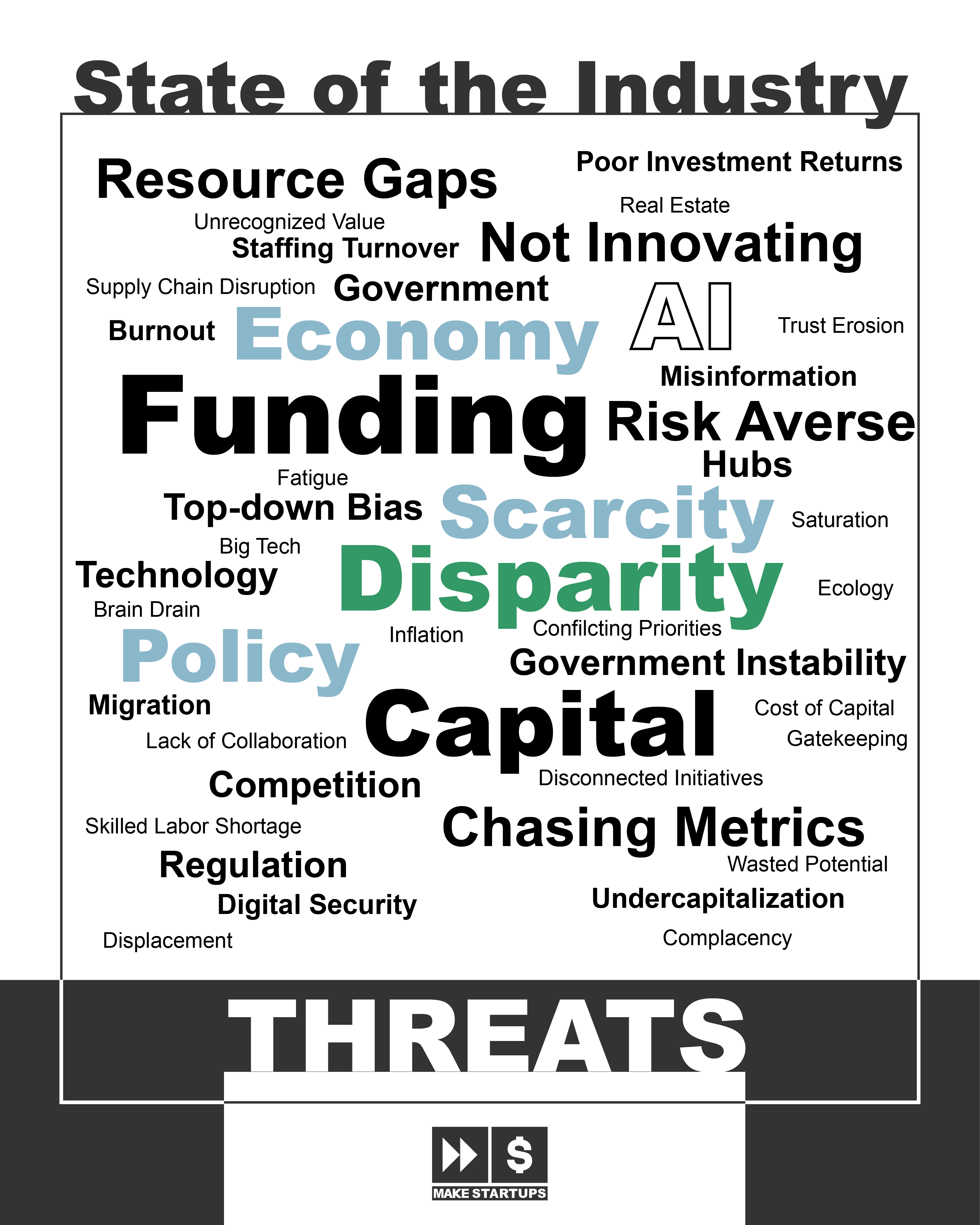
Fragile program infrastructure can unravel under turnover and short-term funding
The source material makes clear that many ecosystems remain one grant cycle or one staff departure away from instability. That makes continuity difficult for founders and weakens trust in the broader support environment.
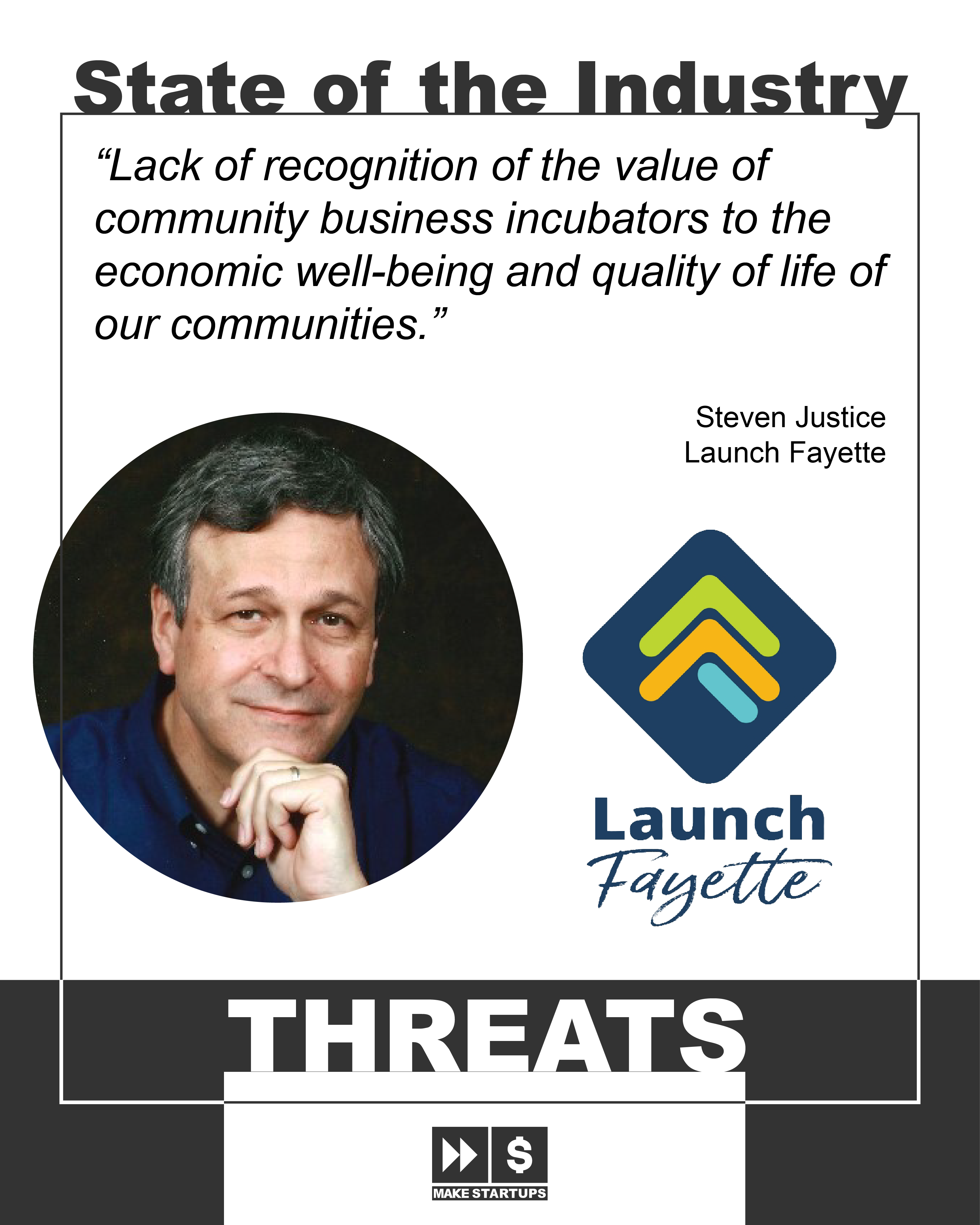
Capital tightening and macroeconomic pressure remain persistent threats
Respondents describe more selective investors, rising costs of capital, scarce funding for intermediaries, and broader economic uncertainty. For undercapitalized founders and ESOs alike, that creates thinner margins for experimentation and slower recovery from mistakes.
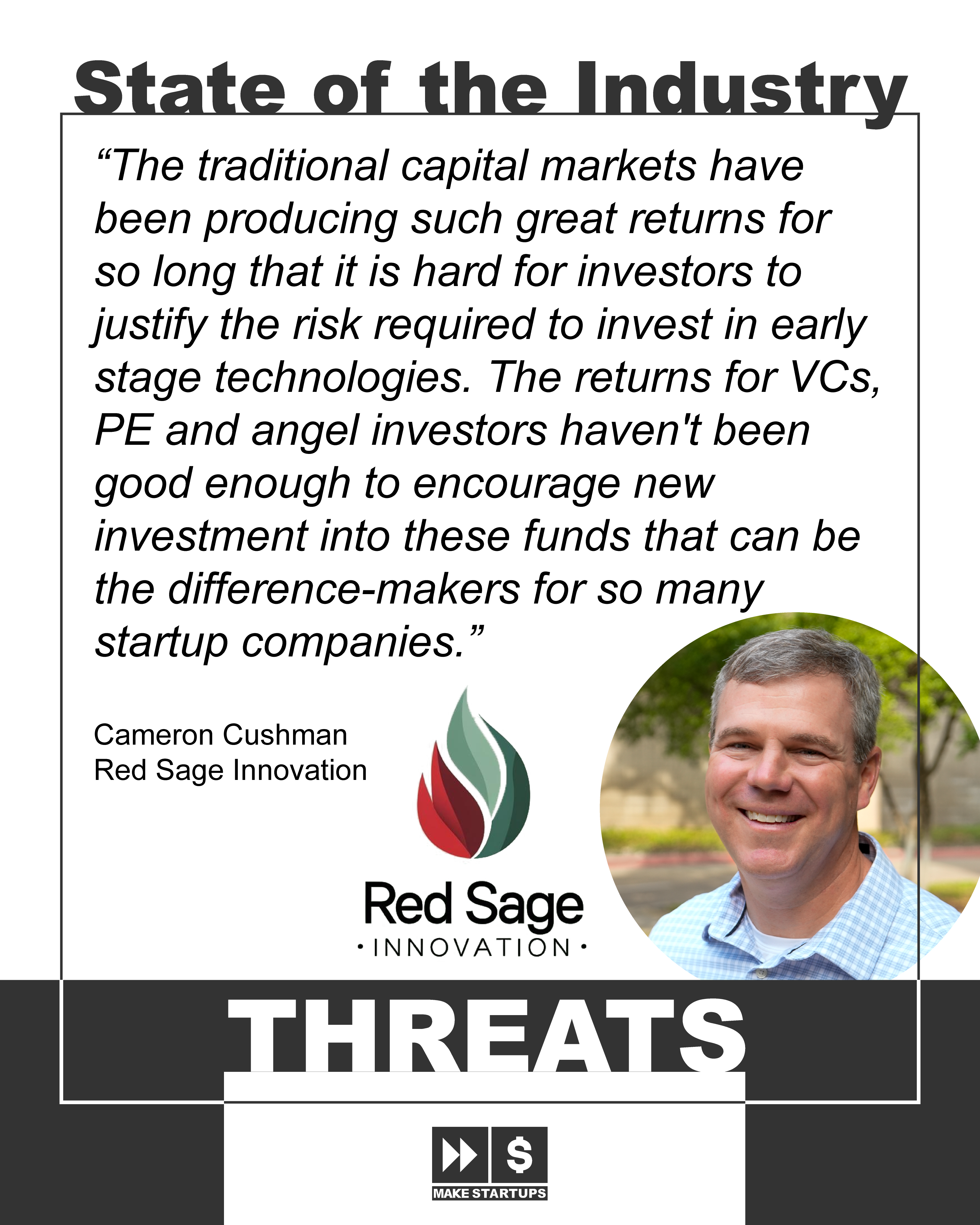
AI introduces execution risk, concentration risk, and cyber risk
The opportunity side of AI is real, but respondents also warn against mistaking tools for strategy, overrelying on algorithmic decision-making, and ignoring cybersecurity, liability, and rapid market displacement.
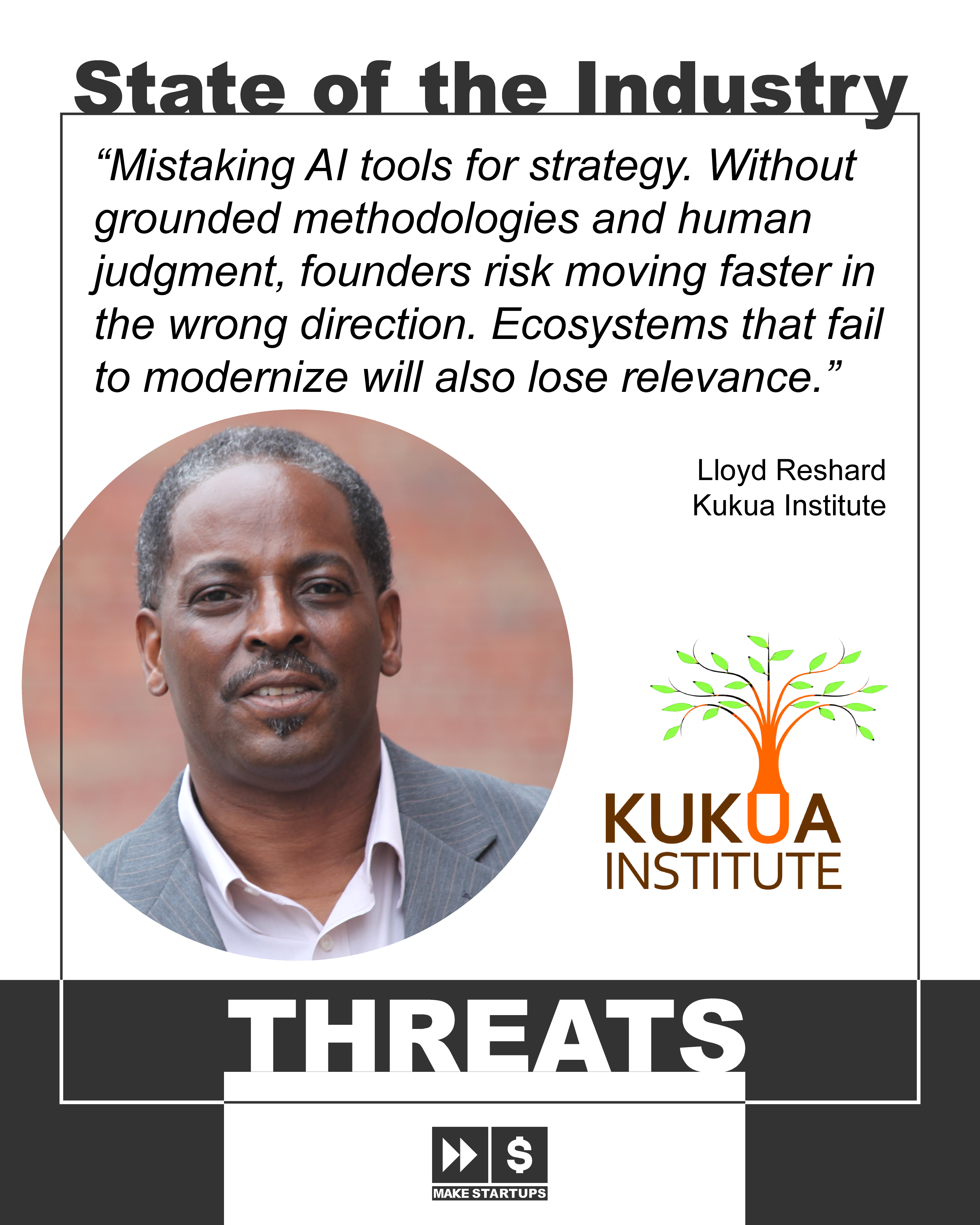
Geographic concentration can leave talent and communities behind
Several responses warn about widening gaps between hubs and non-hubs, rural and urban regions, insiders and outsiders. Brain drain, weak local density, and the concentration of capital and opportunity in a few places threaten broader ecosystem health.
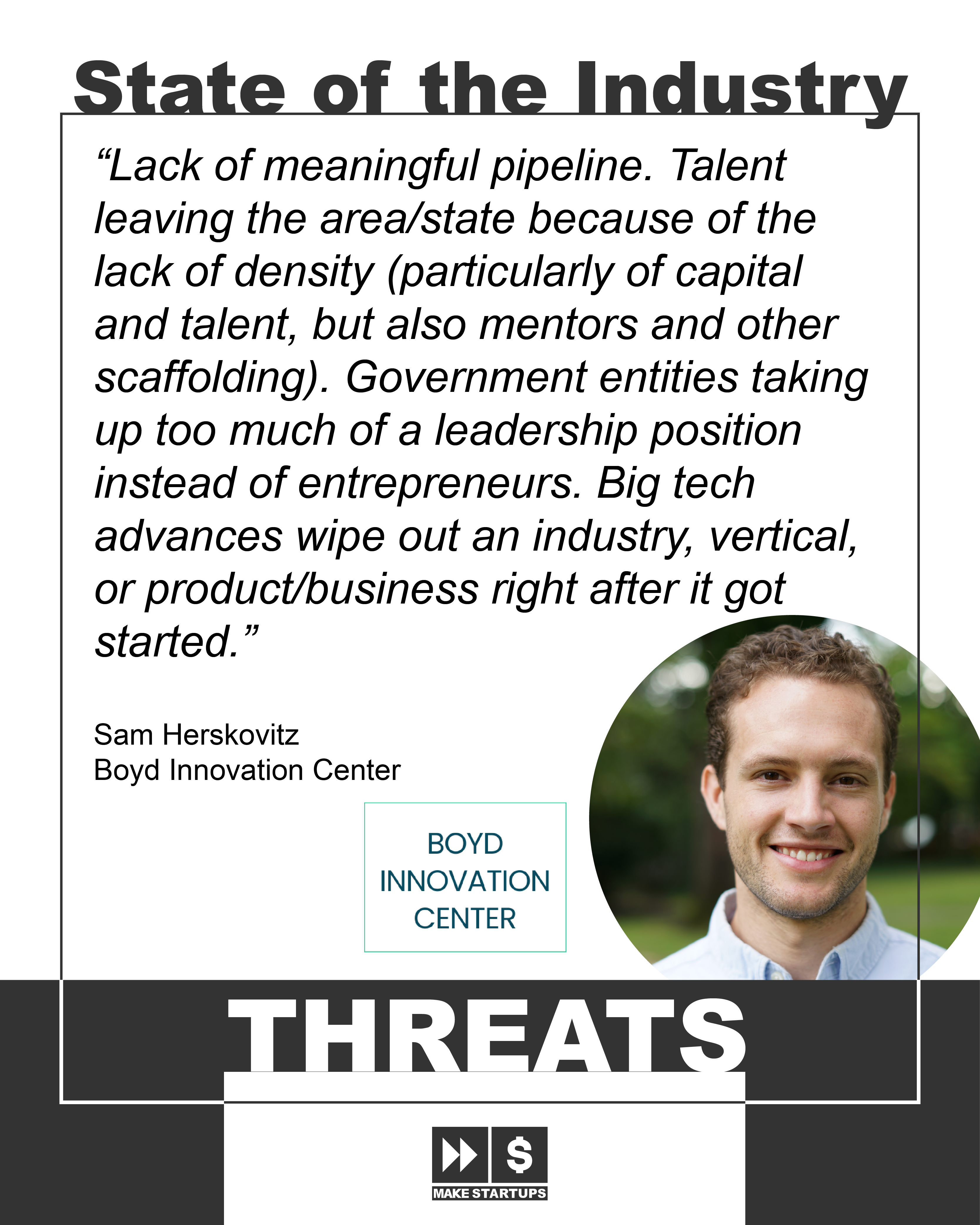
Short-termism can weaken the field from within
Respondents worry about metrics replacing value, hype replacing fundamentals, competition replacing coordination, and burnout eroding founder and practitioner endurance. The risk is not only external shock. It is internal misalignment.
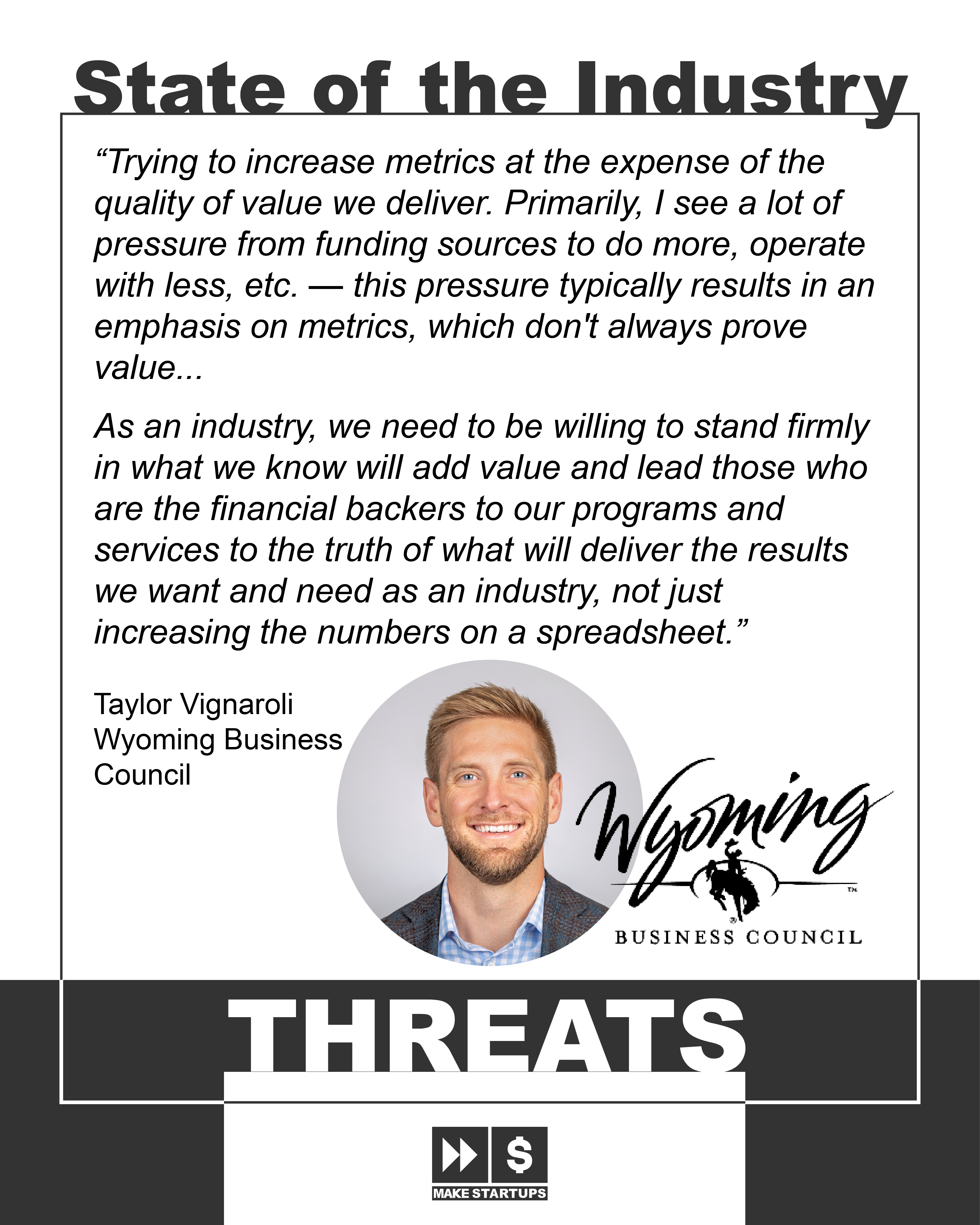
A summary of surveyed threats:
- Fragile program infrastructure can unravel under turnover and short-term funding
- Capital tightening and macroeconomic pressure remain persistent threats
- AI introduces execution risk, concentration risk, and cyber risk
- Geographic concentration can leave talent and communities behind
- Short-termism can weaken the field from within
| Category | 2026 State of the Industry Report |
| Curriculum | all |
| Created | 2026/03/11 |
| Last Updated | 2026/03/11 |
| Content Details | |
| IMI Provider | CofounderOS |
| Published | Make Startups Institute |

|
|
- Executive Summary
- SWOT Analysis: Strengths
- SWOT Analysis: Weaknesses
- SWOT Analysis: Opportunities
- SWOT Analysis: Threats
- Strategic priorities for ESOs
- Conclusion and Additional ESO Insights
- Appendix A. Methodology and limitations
- Appendix B. Cross-quadrant evidence map
- Appendix C. Selected respondent excerpts
- Appendix D. Downloads and References
Make Startups Institute is using CofounderOS to help founders design, launch, and scale their businesses.
Financial aid and scholarship packages are available for most programs.